Resources
The Language You Never Learned to Speak
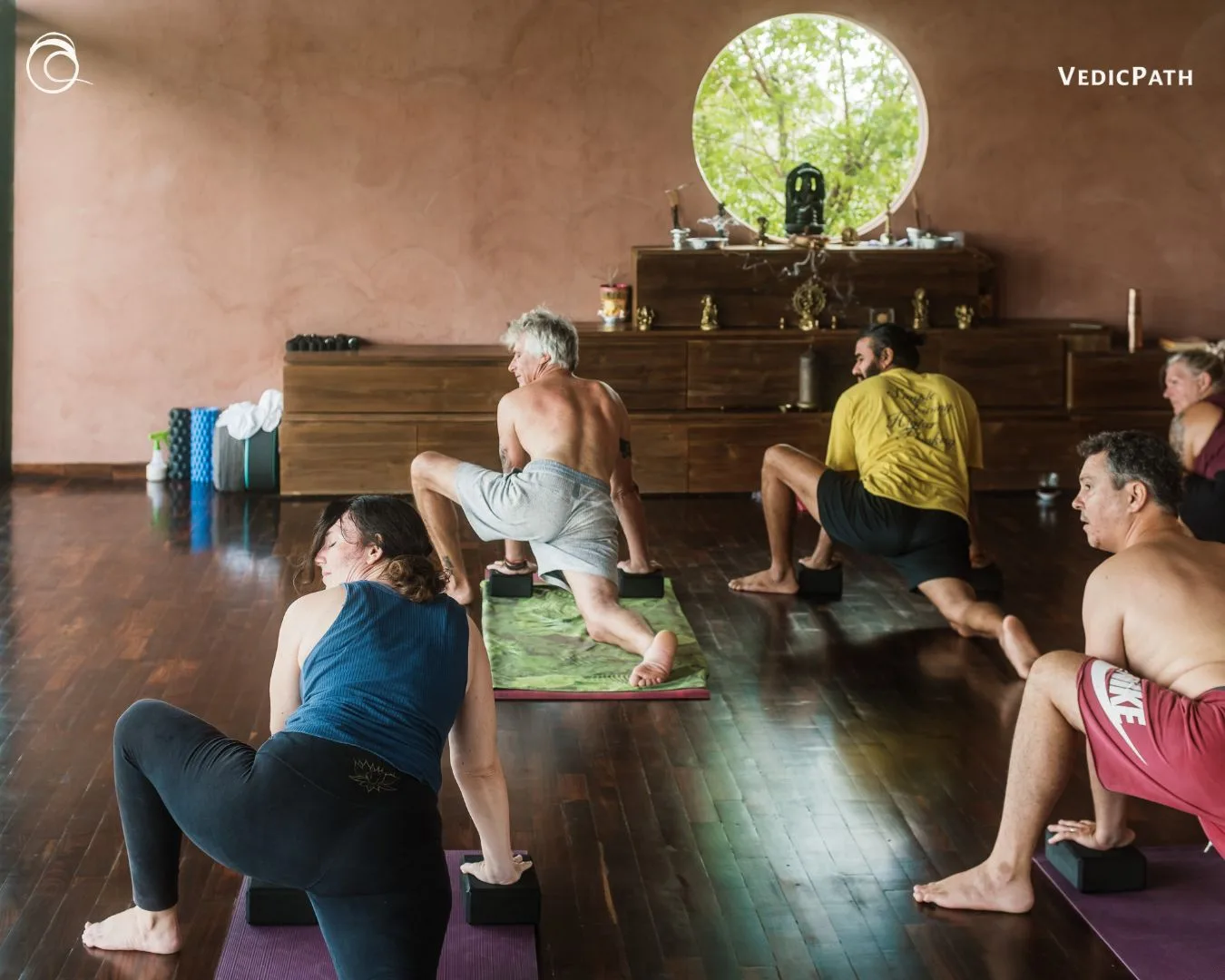
Nilesh said it mid-class once, in that particular tone Ashtanga teachers have, equal parts discipline and certainty: Ashtanga has its own language. This is their language. He said it like a fact, not an opinion. And he was right, just not in the way he meant it.
Every yoga style gets defended like a religion. Ashtanga people think vinyasa is watered down. Yin people think ashtanga is ego dressed up as discipline. Hatha purists think both have lost the plot. Everyone is arguing about which one is right, as if there's a right.
There isn't. A style of yoga is a language, not a hierarchy. Ashtanga is a language built for people who want structure and repetition until the structure disappears into the body. Vinyasa is a language built for people who want breath to lead movement, one thing flowing into the next without a fixed script. Yin is a language for stillness, for tissue instead of muscle, for staying instead of moving. Hatha is closer to a mother tongue, the base the others borrowed grammar from.
None of these languages is more true than the others. A language is only "correct" for the group that speaks it and the purpose it serves. Mandarin isn't a better language than Bahasa Indonesia. It's the language of a different group, shaped by a different history, solving different communication problems. You wouldn't say Mandarin is more advanced than Bahasa, or that Bahasa is a lesser version of Mandarin waiting to evolve. They're different systems that arose to do the same basic job, which is to let people understand each other.
But most language is built for that, for reaching another person. Asana is stranger than that. The person you're trying to reach is yourself.
When you move into a shape, you're not performing it for a room or a teacher or an idea of what the pose should look like. You're asking your hip, your breath, your nervous system, your history, something, and the shape is how the question gets phrased. A hamstring that won't lengthen isn't wrong. It's answering. A breath that won't slow down in stillness isn't a failure of yin. It's telling you something you weren't going to hear any other way.
So the real question was never which style is correct. It's how long you can be fluent in one language and still not hear yourself.